Continuing its efforts to support a diversified economic environment and achieve future prosperity in the Kingdom, Saudi Aramco presented a diverse package of investment opportunities to businessmen in the Eastern Province through its In-Kingdom Total Value Add program (iktva), including opportunities focused in particular on supporting small and medium enterprises.
During the meeting recently organized by Asharqia Chamber under the umbrella of the “Tasheel” program, which the Chamber launched in April 2017 with the aim of stimulating investment activity in the region and opening direct channels of communication between major companies and the local private sector of suppliers, manufacturers, and service providers, Saudi Aramco’s Senior Vice President of Procurement and Supply Chain Management, Mr. Sulaiman bin Mohammed Al-Rubaian, highlighted the importance of supply chains as a fundamental pillar for supporting economic growth, and the efforts made by the company to enhance localization and local content and empower local suppliers.
Al-Rubaian explained that this meeting is an extension of Saudi Aramco’s efforts, through the “iktva” program, to enable local content and build strategic partnerships with the private sector, in support of the targets of the Kingdom’s Vision 2030 and to enhance the participation of local suppliers in the execution of its vital projects.
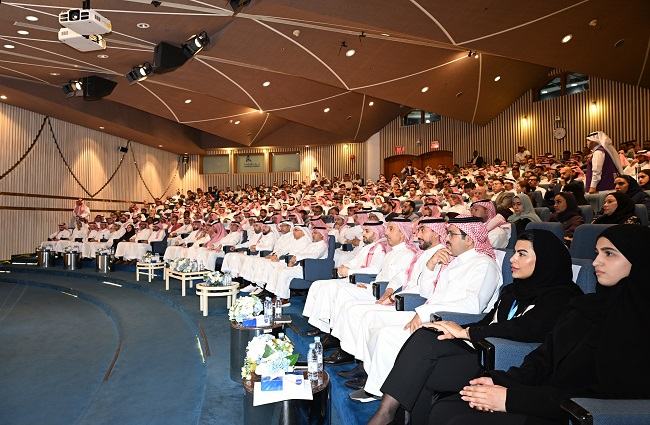
The meeting, held in the presence of Chairman of Asharqia Chamber’s Board of Directors, Fahad bin Abdullah Al-Farraj, featured a panel discussion moderated by Asharqia Chamber Board member Ibrahim bin Mohammed Al Al-Sheikh, with the participation of: Saudi Aramco’s Manager of Industrial Development and Strategic Sourcing, Abdulrahman Al-Asiri; Saudi Aramco’s Manager of Inspection, Badr Busbait; Saudi Aramco’s Manager of Contracting, Sultan Al-Otaibi; and the Manager of SME Development at “Aramco Taleed,” Yousef Al-Ghamdi. The participants discussed supply chains in the energy sector and Saudi Aramco’s targets and pathways in building an integrated and sustainable national system.
The speakers noted that Saudi Aramco’s strategy is based on empowering local suppliers, transferring technology, and reinforcing the state’s direction of enabling local content. They also explained that the company continues to expand the scope of cooperation with the private sector and explore new initiatives that would support the participation of local suppliers in the company’s projects.
For his part, Chairman of Asharqia Chamber’s Board of Directors, Fahad bin Abdullah Al-Farraj, affirmed that the meeting with Saudi Aramco embodies the Chamber’s keenness to strengthen strategic partnerships with major national entities, commending the ambitious strategy adopted by the company to enhance local content and enable the private sector to contribute to its major projects, in support of the empowerment targets of the national economy.
He affirmed that by launching this fifteenth edition of “Tasheel” and hosting Saudi Aramco’s “iktva” program, Asharqia Chamber aims to continue its effective contribution to achieving the aspirations of the Vision, by stimulating local investment and maximizing its developmental impact. He noted that such an economic gathering represents a lever for the region’s business environment and translates the wise leadership’s direction of maximizing local content, especially with our national economy recording quarterly GDP growth of 2.8%, driven by an increase in domestic liquidity to more than SAR 3.2 trillion, which represents a strong source of financial support for local projects.
He added that the “Tasheel” program has proven, over its previous editions, its effectiveness in stimulating economic activity in the Eastern Province by widening the circle of investment opportunities in the fields of procurement, manufacturing, and services, in line with the directions of the Kingdom’s Vision 2030 aimed at diversifying the economic base and localizing supporting industries.
Al-Farraj concluded by saying: “The ‘Tasheel’ program has become a leading platform for creating high-quality partnerships between major companies and local investors,” noting that these meetings form a fundamental pillar for strengthening integration between the public and private sectors and achieving sustainable economic development in the Kingdom.
The meeting included a review of more than 210 investment opportunities for suppliers, supplier registration and qualification procedures, two workshops on the requirements of the iktva program and how to submit the local content certificate, and the requirements and mechanism for obtaining the third-party cybersecurity compliance certificate.