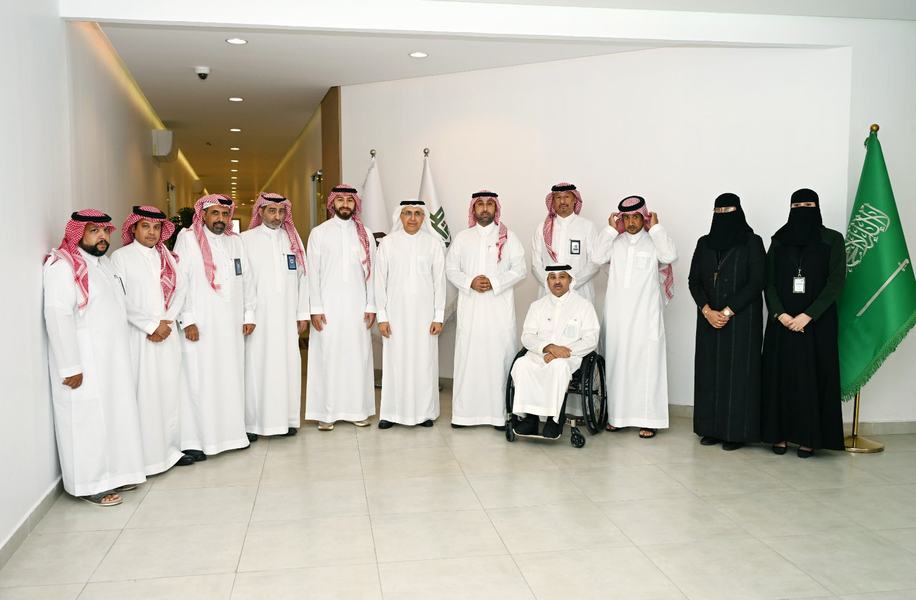
During his visit today, Tuesday, October 20, 2026, Chairman of Asharqia Chamber’s Board of Directors, Fahad bin Abdullah Al-Farraj, met with Khalid bin Ahmed Al-Obaid, Chairman of the Board of Tuwaiq Association for Human Capital Development in the Eastern Province, and members of the Board. Al-Farraj and Al-Obaid discussed opportunities for cooperation between the Chamber and the Association in matters concerning the community and its members. The meeting took place at the Association’s headquarters.
In the presence of Chamber Board Member Ali bin Abdullah Al-Sihati, Secretary-General Abdulrahman bin Abdullah Al-Wabel, and several Chamber leaders, Al-Farraj reviewed Tuwaiq Association’s key achievements and programs since its establishment, as well as its efforts to achieve its objectives and strengthen its impact on the community. The delegation also toured the Association’s facilities and met with its staff.
Chairman of Asharqia Chamber’s Board of Directors, Fahad bin Abdullah Al-Farraj, praised the high-quality programs and initiatives he had seen at Tuwaiq Association, commending its efforts to qualify national talent and develop its capabilities, as well as its role in supporting the human resources development ecosystem.
Al-Farraj said: “The efforts and initiatives we have seen at Tuwaiq Association reflect a promising model for the role of the nonprofit sector in developing human capital. We look forward to strengthening cooperation, exchanging expertise, and building effective partnerships that link training and qualification programs to the actual needs of the business sector, thereby expanding opportunities for high-quality employment and enhancing the participation of national talent in economic development, in support of Vision 2030.”
For his part, Tuwaiq Association Chairman Khalid bin Ahmed Al-Obaid stressed the importance of the visit in broadening the scope for cooperation and benefiting from Asharqia Chamber’s expertise and its relationships with the business sector. This, he said, would create more opportunities to build effective partnerships that help develop the qualification and employment ecosystem. He noted that integration with the private sector is a key pillar in turning training outcomes into sustainable career opportunities and launching high-quality initiatives that enhance the competitiveness of young Saudis in the labor market.
Al-Obaid explained that the Association’s programs and initiatives are grounded in its belief that investing in people is the foundation for building a sustainable economy. It seeks to prepare qualified national talent equipped with professional and specialized knowledge and skills. He emphasized that maximizing developmental impact requires complementary roles and coordinated efforts between the private and nonprofit sectors to keep pace with the rapid changes in the labor market.
 Beta